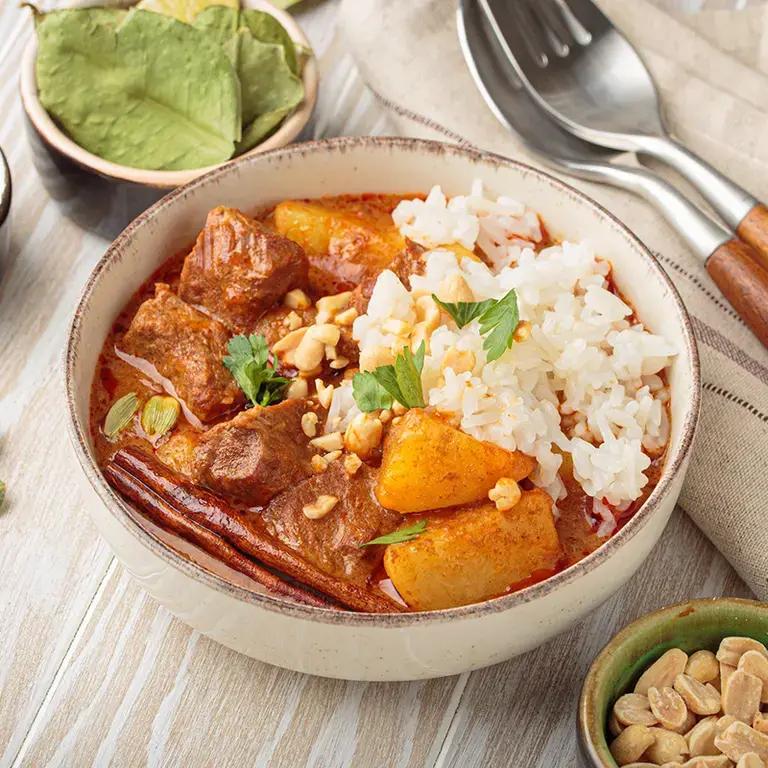

Fry the curry paste before adding the liquid, as cooking it in oil and coconut cream develops the spices and adds greater depth of flavour to the beef massaman curry. A well-marbled cut of beef such as chuck or brisket is best for this dish, as it benefits from the slow cooking process and tenderises during simmering.
The peanuts are a key component of the dish, as they provide texture and a signature roasted, nutty flavour. Let the curry rest for three minutes before serving to thicken the sauce and allow the flavours to integrate fully.
The Thai curry that came from Persia
The history of the massaman curry, known in Thai as gaeng massaman, is influenced by the Muslim merchants and communities that moved throughout Southeast Asia. It has a clear connection with Persian, Indian and Malay-Muslim culinary traditions and was documented in Thai culinary writing by the 19th century. Coconut milk, tamarind paste, fish sauce and Thai curry paste make this dish into a Thai curry.
Dry spices: cardamom, cinnamon, cloves and star anise
The dry spices give massaman curry its warm, sweetly aromatic profile. Cardamom adds a floral aroma whilst cinnamon brings warmth and sweetness. Cloves offer an almost medicinal spice note and star anise contributes a liquorice-like sweetness that pairs particularly well with beef. The spices create warmth beneath the coconut, tamarind and savoury ingredients and set it apart from chilli-forward Thai curries.
Breaking the coconut milk
Cooking coconut milk or cream until its fat separates from the watery component is what’s referred to as breaking or splitting the coconut milk. This can then be used as the cooking fat for frying the curry paste, letting the spices bloom without adding more oil.
Canned coconut milk is often stabilised to prevent separation, so you can fry the curry paste in neutral oil instead, as suggested in the recipe above.
For any leftover coconut milk, you can find top tips on how to freeze it for future recipes in our helpful article or try making a classic satay sauce at home.
Beef, potatoes, peanuts and tamarind
Rich beef, creamy potatoes, roasted peanuts and sharp tamarind form massaman’s distinctive taste profile. Beef chuck tenderises during the slow cooking process and the potatoes absorb the coconut curry sauce. Roasted peanuts add a sweet, earthy flavour with a contrasting crunch and tamarind brings a fruity sourness to balance the coconut milk and sugar.
It is possible to make a massaman chicken curry; however, chicken cooks much faster. If you choose to substitute chicken, use boneless chicken thighs and add them later in the process to prevent them becoming dry.
Why massaman is not a hot curry
Massaman can contain dried chillies, but its character comes as much from toasted spices, aromatics, coconut milk and sweet-and-sour seasoning as from chilli heat. Spiciness varies between recipes and curry pastes, so you can adjust the heat by adding dried chillies or choosing a milder paste.