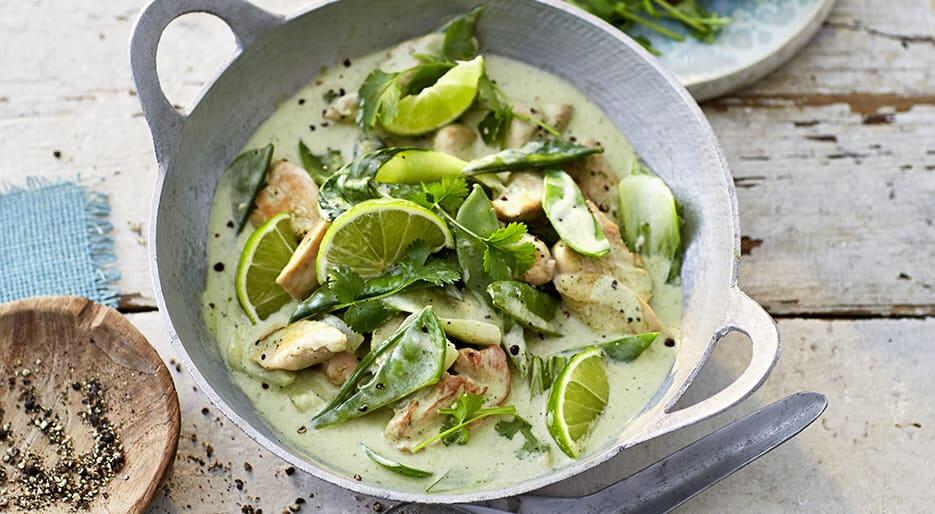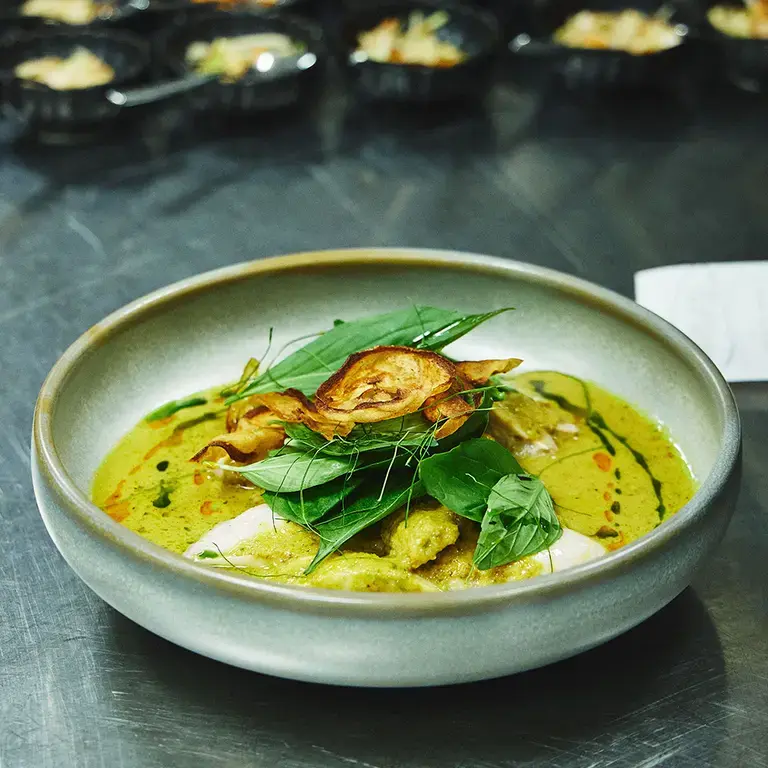

When splitting the coconut milk in this Thai green curry recipe, choose a full-fat version that’s more likely to separate. Don’t shake the coconut milk before opening so the cream remains at the top.
A gentle simmer is all that’s needed to cook the vegetables and keep the chicken tender once the rest of the milk is added. The Thai basil should only be added at the very end to keep its aniseed-like fragrance vibrant.
If you can’t find fish sauce readily available, you can substitute light soy sauce in for this part of the recipe if you have it in your cupboard at home instead.
Sweet green curry: what the name means
In Thai, this dish is known as gaeng keow wan, which translates roughly as sweet green curry. The green refers to the colour of the curry paste, which comes largely from fresh green chillies and herbs. Sweet refers to the mild sweetness of the dish, which comes from the palm sugar and coconut milk.
The paste: pounding your own
Green curry paste is made by pounding fresh ingredients in a pestle and mortar. A typical green curry paste features fresh green chillies, lemongrass, galangal, garlic, shallots, coriander root and makrut lime peel. Pound the hardest ingredients first before gradually adding the softer ones. Making your own paste at home gives greater control over the final level of heat in the dish.
Why the coconut milk has to split
Splitting or breaking the coconut milk refers to the process of heating the coconut cream until the fat separates from the water-based part, leaving coconut oil on the surface. The fat provides the cooking medium for the paste, concentrating the aromatics. This stage develops a deeper and more complex flavour in the final curry, though you can fry the paste in a neutral oil if the milk won’t split.
Any leftover coconut milk can actually be frozen to keep for future use.
Thai aubergines, basil and makrut lime leaves
Thai aubergines are small and firm, and remain intact during the cooking process to absorb the flavours in the sauce, though you can substitute in a regular aubergine if you can’t find this variety at your local supermarket.
Thai basil has a more pronounced peppery character than Mediterranean basil, and should be added towards the end of cooking. Makrut lime leaves add a distinct aromatic citrus note that’s more complex than simple lime juice. Lightly bruise the leaves before adding to the dish to encourage a release of aromas.
Adjusting the heat
Green curry is typically one of the hotter Thai curries, as the paste is made using fresh green chillies; however, the heat varies enormously depending on the type and quantity of chillies used.
If you make your own curry paste, you can adjust the number of chillies used for a milder curry. If you’re using a shop-bought paste, taste as you go before adding any additional chillies to the mix.