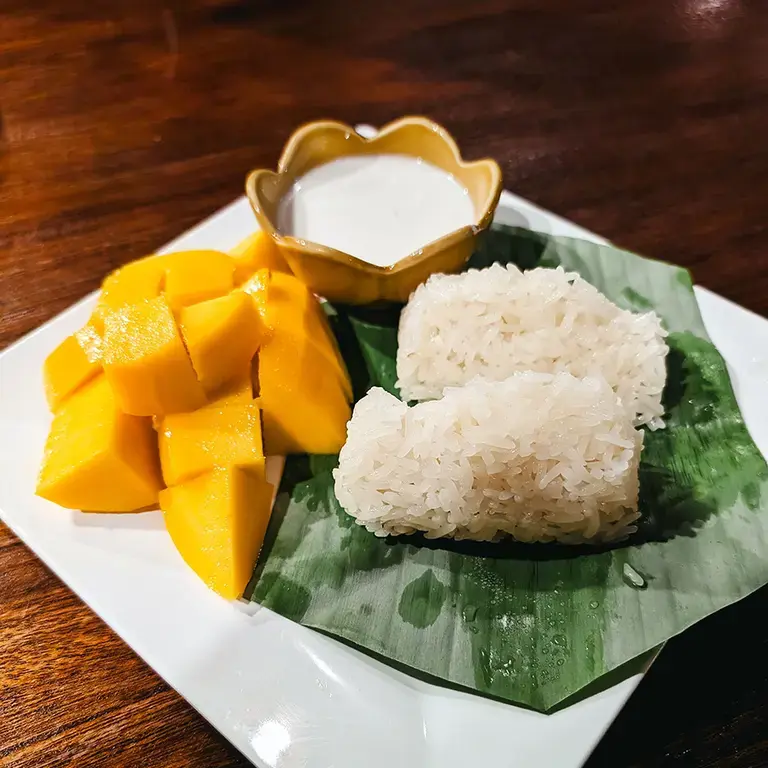

For the best results use Thai glutinous rice, to develop the signature cohesive, chewy texture for the dessert. It’s important not to skip the step of rinsing the rice and soaking as otherwise the grain can stay hard in the centre. Steaming also helps to create the right texture without becoming waterlogged.
Khao niao mamuang and the mango season
Khao niao mamuang refers to mango with sticky rice. Khao niao means sticky rice, whereas mamuang means mango. It’s a dessert deeply connected to Thailand’s hot season and mango harvest, when fragrant mangoes are at their freshest. The season broadly runs from March to May and this dish is particularly popular during Thailand’s annual Songkran period in April.
Glutinous rice: soaking and steaming
Glutinous rice contains a high proportion of amylopectin, which is the starch that creates its sticky, elastic texture when cooked. Soaking lets the water penetrate the hard grains prior to steaming to help them cook evenly. Four hours is the minimum soaking time, but if you can leave the rice overnight, you’ll get even better results with the texture.
Traditionally, the soaked rice is steamed in a bamboo basket, but a tea towel-lined steamer also works well at home.
Two coconut sauces, sweet and salted
The coconut milk for this dish is seasoned with sugar and salt to balance the sweetness and enhance the brightness of the coconut and mango flavours. The rice is covered in a warm coconut mixture that’s absorbed into the grains, and a second coconut mixture is served as a salted sauce spooned over the rice just before serving, as in the recipe above.
The sauce for spooning over the rice should be creamy, rather than custard-like, and the cornflour mix helps the sauce to cling to the grains.
Choosing the mango
Look for a ripe, sweet mango with fragrant flesh and a strong fruity aroma. Avoid any that are very firm or have obvious bruising. The flesh should be smooth and juicy, not stringy, making it easy to slice. If you can’t find fresh Thai mangoes in your local supermarket, look for ripe varieties that are naturally sweet.
Mango is the classic choice for this dish, but you could use other spring fruits, such as strawberries or rhubarb, for a contemporary twist on the dish.
Toppings: sesame or crispy mung beans
In the recipe above, we’ve suggested using toasted sesame seeds to garnish the dessert for a nutty contrast to the sweet mango and creamy coconut rice, but crispy yellow mung beans are also commonly used. The beans add a crunchy texture and have a light savoury, nutty character that works well overall in the dish.
For a Southeast Asian-inspired variation, try drizzling a little kaya jam over the sticky rice. The pandan-scented coconut and egg jam adds another layer of richness, but it isn't a traditional component of Thai mango sticky rice. For a drink pairing, serve with a homemade tapioca pearl boba tea.