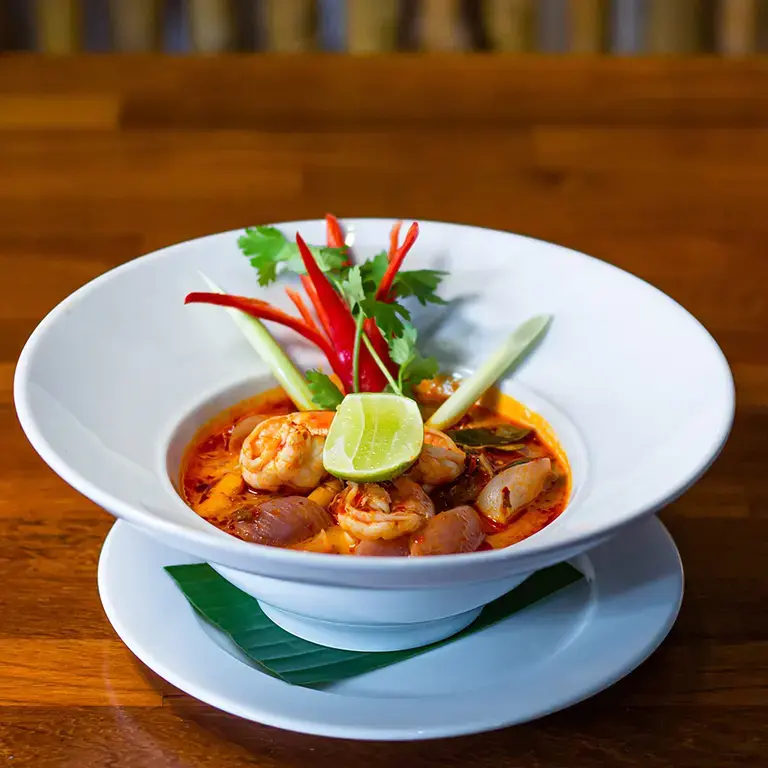

A classic tom yum recipe is all about balance. The final soup should be hot, sour, salty and subtly sweet. Use fresh ingredients, especially the makrut lime leaves, galangal and lemongrass where possible to give the soup a fresh, citrus-forward aroma.
Add the prawns towards the end of cooking and only let them simmer until just opaque and cooked through. Accidentally boiling the prawns or overcooking will cause the prawns to become undesirably tough.
Boiled, sour, prawn: reading the name
Tom refers to the simmering process and yum references a Thai style of spicy, sour seasoning, while goong means prawn. The goong in the name is, therefore, key as it distinguishes this recipe from other variations featuring chicken or fish.
Nam sai and nam khon: the two tom yum
Tom yum nam sai is the clear broth version of this dish that allows the aromatics to shine through cleanly, whereas tom yum nam khon is a richer, creamier style made by adding evaporated milk for a fuller appearance. The two styles encompass a similar fundamental hot and sour flavour profile, but the nam khon softens the acidity and chilli. The recipe shared above is more classically nam sai in style with a clear broth.
Galangal is not ginger
Galangal is a different plant from ginger, with a sharper, peppery, pine-like and citrusy aroma, whereas ginger is warmer, sweeter and spicier. Replacing galangal with ginger would entirely shift the character of the soup. If fresh galangal is unavailable at your local supermarket, look for frozen or powdered galangal for this soup.
The prawn stock that makes the difference
Prawn shells contain flavour compounds that give broth a deep flavour, and can be easily used at home to make prawn stock. Simply simmer the prawn shells in water for 20 minutes and strain before adding to the recipe above. Keep the shell stock light as its intended use is to build a savoury seafood foundation without overpowering the aromatics.
When to add the lime juice
The fresh lime juice should be added at the end of cooking, off the heat, as prolonged heating of the juice will drive off some of the fresh citrus aromas and flatten the overall taste. Adding it at the end helps to keep the broth bright and lively.
The amount of juice and acidity will vary between limes, so taste and adjust the balance in the recipe above to achieve the soup’s signature pronounced sourness.
For more broth-based soup inspiration, take a look at our selection of 15 of the top broth recipes, including pork edamame soup and classic French onion soup.