
Sorry, you need to enable JavaScript to visit this website.

Peking duck

FDL
By
Fine Dining Lovers
Editorial Staff
Difficulty
Medium
Total Time
14H 15MIN
Cuisine
Ingredients

Whole duck: 2kg

Boiling water: 500ml

Maltose: 2 tbsp

Hot water: 2 tbsp

Chinese black vinegar: 2 tbsp

Shaoxing wine: 1 tbsp

Hoisin sauce: 2 tbsp

Spring onions: 1

Cucumber: 1

Plain flour: 250g

Sesame oil: 1 tsp

Peking duck is a traditional Chinese dish known for its exceptionally crispy skin and tender meat, prepared over several stages. Discover our Peking duck recipe below

Serves 4

01.
Prepare the duck

Remove excess fat from the duck cavity, trim away loose skin and pat dry. Carefully loosen the skin from the breast and thighs with fingers to create an air pocket. Place the duck on a wire rack over a tray and pour boiling water over the skin until every part of the duck is scalded. 

02.

Mix the maltose with hot water and stir in the Chinese black vinegar and Shaoxing wine. Brush over the duck. 

03.

Refrigerate the duck uncovered on a wire rack over a tray for 12 hours until the skin is dry and taut. 

04.

Preheat the oven to 220°C and remove the duck from the fridge. Roast for 15 minutes then reduce the oven to 180°C and roast for 60 minutes. Cover any darker areas of skin with foil if needed. Rest for 15 minutes before carving. 

05.
Make the pancakes

Add the plain flour to a bowl and gradually stir in the boiled water until a dough forms. Knead for 5 minutes, until smooth. Cover and rest for 30 minutes. 

06.

Divide into small balls and roll into a thin circle. Brush each pancake lightly with sesame oil, place another on top and roll together until thin. 

07.

Cook in a frying pan over medium heat for 30 seconds on each side and separate the pancakes whilst warm. 

08.
Serve the dish

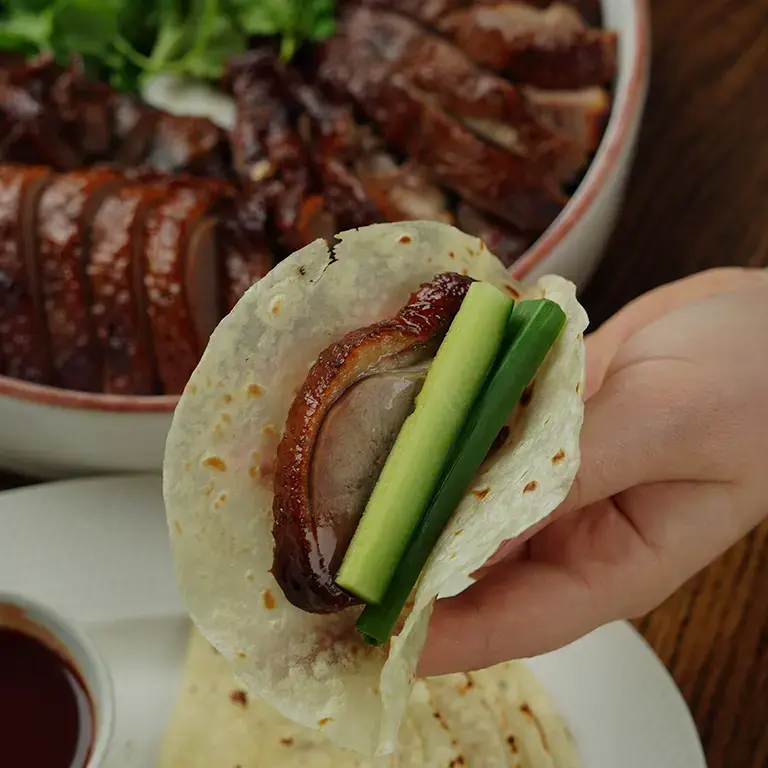
Carve the duck into thin pieces of crispy skin with a small amount of meat. Spread a pancake with hoisin sauce, add duck and finish with strips of spring onion and cucumber. Roll the pancake to eat. 

Tips and tricks

Opt for a whole duck with intact skin and dry it thoroughly before glazing. Any surface moisture will prevent the skin from crisping. Roasting the duck on a rack allows hot air to circulate underneath for an even roast and make sure you don’t rush the drying stage as it needs this time for the skin to become taut.

If you’re keen to explore other roast poultry after making this dish, take a look at our guide to all the different cuts of chicken. 

A Beijing dish, not a Cantonese one

Peking duck is a Beijing dish belonging to the culinary tradition of northern China. It’s often grouped together with Cantonese or Chinese roast duck, simply because both dishes use a whole duck, but they’re prepared differently. 

Cantonese duck is seasoned and roasted for savoury, aromatic flavour, whereas Peking duck focuses on the texture of the thin, crisp and lacquered skin. Peking is in fact the older English spelling of Beijing, and simply means Beijing-style roast duck. 

Why the skin is separated from the meat

In the traditional preparation, air is pumped between the skin and flesh to separate them. This creates a layer of air that helps the skin dry independently from the meat and allows rendered fat to drain away during roasting.

At home, carefully loosening the skin with your fingers can approximate some of this effect, although it won't create the same degree of separation as the traditional method.

The maltose glaze and the drying time

Maltose contributes to Peking duck's characteristic glossy, deeply coloured skin, encouraging the surface to caramelise during roasting.

The drying stage is key, as this allows moisture to evaporate making the skin dry, tight and papery before it’s roasted. Dry skins crisp up, whereas wet skins steam. We’ve suggested 12 hours in the recipe above, but overnight is preferable where feasible. 

How to serve: pancakes, cucumber, hoisin

Peking duck is carved into thin slices with the crisp skin and served in thin pancakes. Hoisin sauce is usually spread over the pancake first, topped with the duck, spring onions and cucumber slices. The fresh, crisp texture of the cucumber and spring onions cut through the richness of the duck for a balanced dish.
Spread the flavour – share this story

Join the community
Badge
Join us for unlimited access to the very best of Fine Dining Lovers.
Discover more culinary secrets
Badge
Register now and start cooking like a pro with these curated recipes.

Already a member? LOG IN