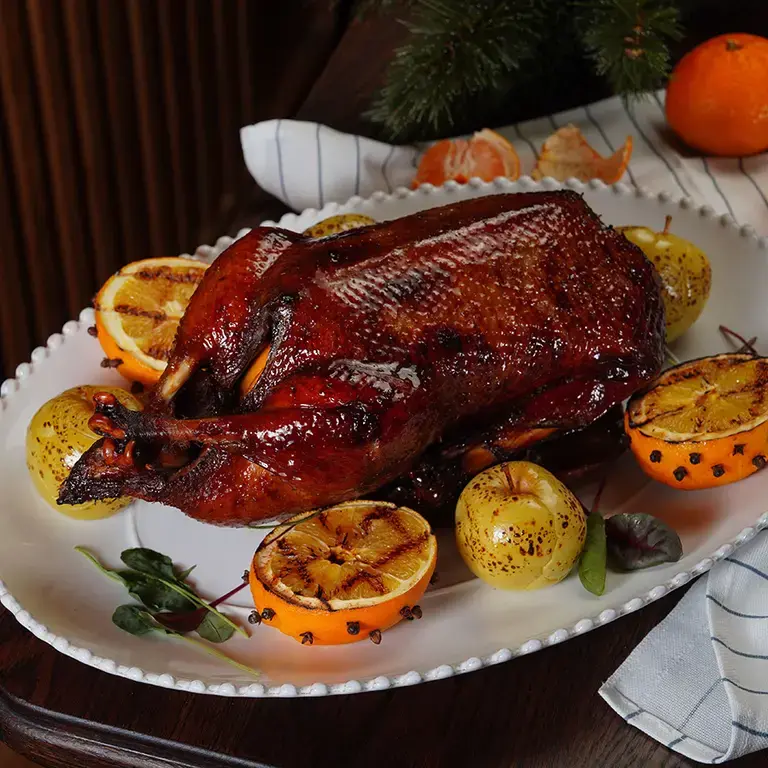

The key to creating the blistered skin is to dry it thoroughly before preparation and cooking. Scalding before the drying process with boiling water also tightens the skin, readying it for the glaze.
In the recipe above, we’ve suggested 12 hours for drying in the fridge, but if you can leave it overnight, the longer drying period removes even more surface moisture. Maltose gives the roast goose its signature deep colour, but if you can’t find this at your local supermarket, you can substitute with honey. However, this will give a slightly different flavour and finish, and can caramelise more quickly.
Chopping through the bone is the traditional method for serving Cantonese roast goose to keep the meat, fat and crisp skin together.
Siu mei: the Cantonese roast meat tradition
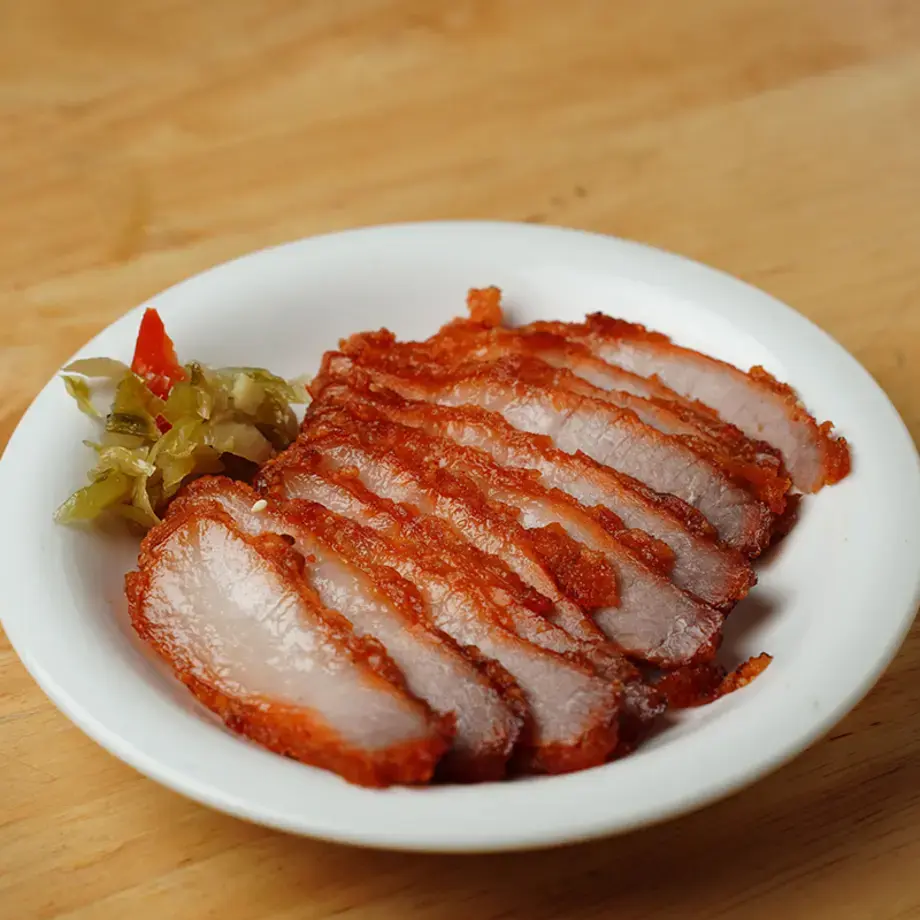
Siu mei means Cantonese-style roasted meat and encompasses the glossy, flavoured meats often seen hanging in the windows of roast-meat shops. Roast goose is one of the classic siu mei dishes, alongside char siu (barbecued pork), roast pork and roast duck. They’re known for their glossy, lacquered surfaces and crisp, caramelised skin with deeply seasoned meat.
Why dry skin is the whole technique
The surface moisture on the meat has to evaporate before the skin can brown and crisp. Air-drying concentrates the glaze and helps the maltose coating to cling to it. As the goose roasts, fat beneath the skin melts away, leaving a thinner, crisper layer.
Overnight drying is one of the easiest restaurant techniques to reproduce at home, although a domestic oven cannot fully replicate the intense heat and airflow of a specialist roast-meat furnace.
Charcoal furnace and home oven: what changes
Traditional roast goose is cooked in a specialist furnace, often using charcoal, where intense heat renders the fat and blisters the skin.
You won’t get exactly the same results in a home oven, but using a rack keeps the goose elevated and lets hot air circulate. Roasting in two stages, as recommended above, also helps, with the first roast rendering and browning, and the second, lower-temperature roast cooking the meat through. A final blast of high heat crisps and colours the skin.
Goose or duck
Goose is a traditional choice for siu mei, but duck can be a practical alternative and uses similar principles, including seasoning, glazing, drying and roasting. Goose has more fat, which makes the meat richer, but duck is easier to fit into a domestic oven and has a shorter cooking time. If substituting duck for goose in the recipe above, you’ll need to reduce the cooking time.