
Cut the pork into evenly sized pieces so they cook at the same rate when in the pan. Marinating the meat briefly before cooking adds savouriness to the dish and greater flavour complexity.
Frying in batches prevents overcrowding in the pan, which lowers the oil temperature and can cause the pork to cook too slowly, rendering the coating greasy. Make sure you add the pineapple chunks towards the end of cooking so they have just enough time to warm through without becoming mushy.
Gu lou yuk: the dish behind the takeaway
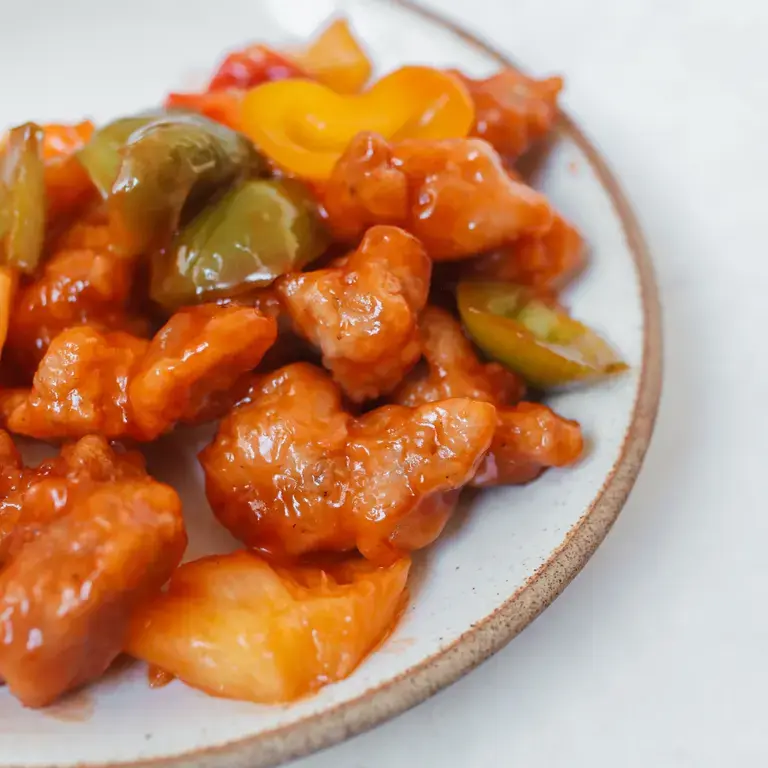
Gu lou yuk is the Cantonese name for sweet and sour pork, a dish that’s become popularised globally through Chinese restaurants and takeaways. Its defining characteristic is crisp fried pork with a sweet and sour sauce, while ingredients such as pineapple, peppers and onion are common in many contemporary versions served in the UK and elsewhere.
Cantonese cuisine adapted as it spread around the world where ingredients, sweetness and even the presentation changed to suit local tastes.
The sauce is the dish
The sweet and sour sauce brings balance to several opposing flavours. The sugar offers a touch of sweetness, rice vinegar balances this with crisp acidity, while soy sauce adds a salty, umami note. Finally, ketchup brings colour, body, sweetness and acidity.
Pineapple juice adds a further layer of fruity acidity and sweetness, offset by the savoury, aromatic character of garlic and ginger. Sugar contributes to the sauce's sticky, glossy quality, while cornflour thickens it so that it coats the pork. The final taste profile of the sauce should be balanced, sticky and complex for the perfect sweet and sour pork.
Soy is a key element in the sauce for balance, but if you need to substitute this for any reason, including dietary requirements, you can find helpful suggestions in our detailed article.
Keeping the batter crisp
This Cantonese dish is best known for its textural contrasts between the crunchy fried pork and the glossy, sticky sauce. Cornflour creates a light, crisp coating around the pork, while keeping the fried pieces separate from the sauce until serving preserves the texture.
To make the pork even crispier, you can double fry it. The first fry cooks the meat and sets the coating, and a second fry removes excess moisture for an even crunchier exterior. Once fried, drain the pork on a wire rack and don’t let it sit in its own steam. Only add the pork to the sauce when you’re ready to eat the dish; otherwise it’ll soften.
Pineapple: tradition or Western addition
Pineapple is closely associated with the sweet and sour pork served in many Chinese restaurants around the world, particularly in Westernised versions. It isn't essential to every Cantonese preparation, however, and recipes vary widely in their use of fruit, vegetables and different sweet and sour seasonings.
In this recipe, pineapple adds sweetness, acidity and a juicy, fruity contrast to the crisp pork.