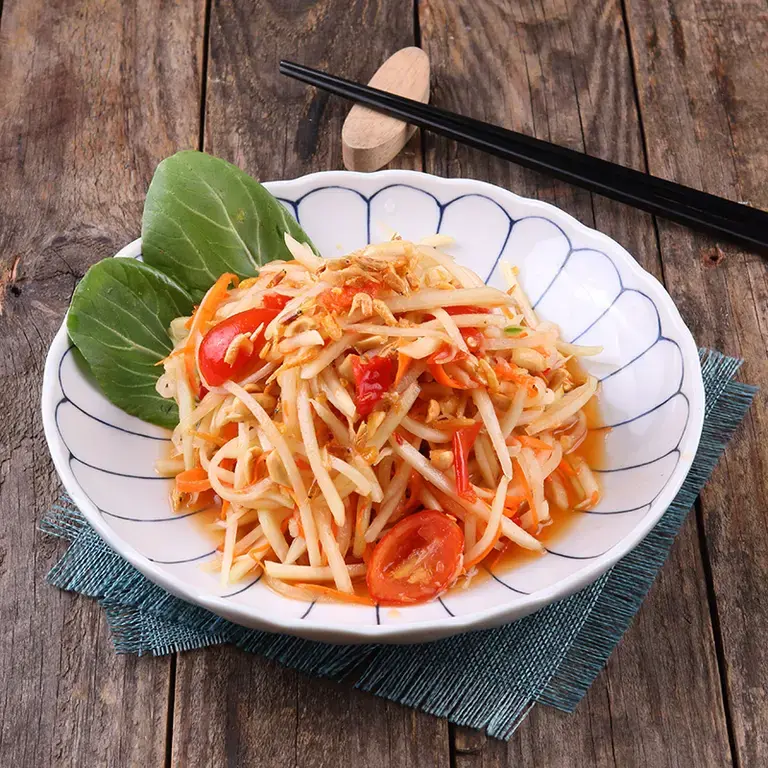

Som tam is a fresh Thai papaya salad, so it’s best made to order and served while the papaya is still crisp and the dressing is bright. Don’t over-pound the ingredients; you’re aiming to bruise and flavour the different components, not create a smooth paste.
The papaya needs to be crunchy and cut or shredded into thin, long strands to absorb the dressing. Prolonged contact with the dressing will turn the papaya soft and mushy.
Sour and pounded: what the name means
The name of this salad describes the technique and flavour. Som refers to something sour or acidic and tam means to pound or pestle. Pounding bruises the ingredients and releases their aromas to distribute flavour throughout the dressing.
From Isaan to the rest of Thailand
Som tam is deeply connected with the northeastern region of Isaan, where it’s a prominent part of the food culture. It reflects the area’s focus on chilli, sourness, saltiness, herbs, fermented ingredients and sticky rice.
The dish has spread throughout the country, with Bangkok becoming a major site for Isaan restaurants and street stalls, popularising this recipe in the capital. Regional variations will use additional ingredients such as fermented fish, salted crab and dried shrimp.
Why the mortar matters
The mortar is fundamental to the preparation, where chilli and garlic are pounded first to release oils and aromas into the dressing. The ingredients should be gently bruised rather than aggressively pounded, as too much force can turn the papaya soft and watery.
If you don’t have a large pestle and mortar in your kitchen, you can make the dressing in a smaller one and toss it vigorously with the papaya in a separate bowl rather than crushing it all together in too small a space.
Choosing and shredding green papaya
Green papaya is unripe, with pale, firm flesh that’s mild and neutral in flavour with a crispy texture. Look for a green papaya that feels firm without obvious bruising. Traditional som tam preparation recommends using a julienne peeler to create fine strands, but a mandoline can also be used at home. The strands need enough structure to stay crunchy while absorbing the dressing, so avoid making them too fine.
Adjusting the heat
Thai bird’s-eye chillies offer heat and flavour, and it’s best to start with one chilli and increase gradually to adjust the heat levels as you go. Pounding the chillies releases their oils, and you only need a small amount to create the right perception of heat throughout the salad.
If you want to make a milder version, remove some of the chilli seeds first and don’t compensate by using sugar. The aim is to maintain a balance of sour, salty and sweet flavours alongside the chilli heat.
For a Southeast Asian-inspired meal, serve som tam alongside nasi goreng. The salad's sour, spicy dressing provides a fresh contrast to the savoury fried rice.