Sorry, you need to enable JavaScript to visit this website.
Passata

All photos: iStock

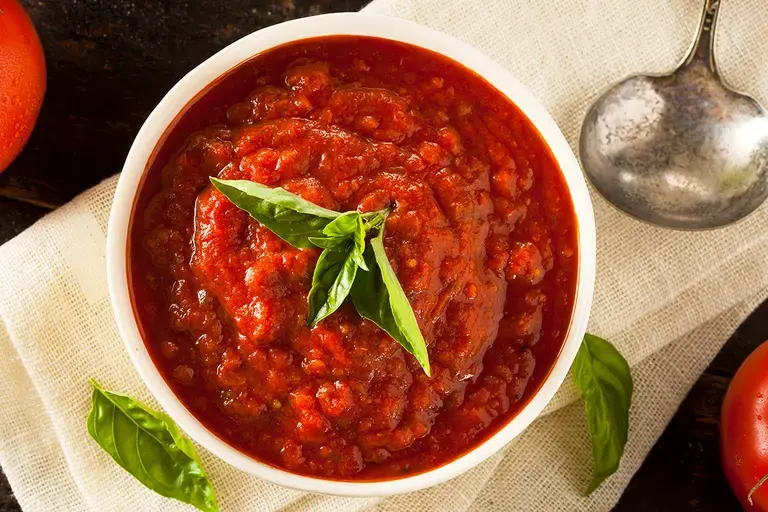
How to make passata pomodoro like an Italian nonna

7 Minute read

All you need to know about making perfect traditional passata pomodoro at home, just like an Italian nonna

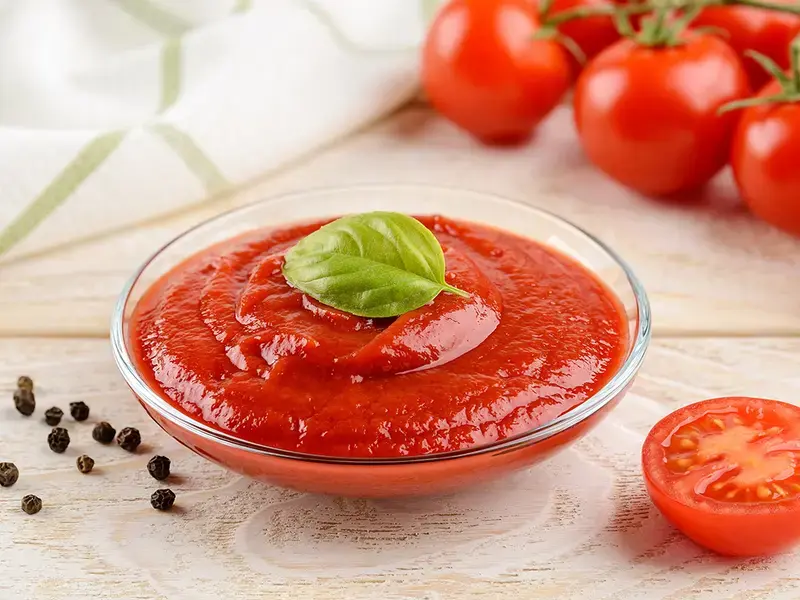
While store-bought tomato passata is cheap and convenient, there is simply no comparison to making it yourself from your own garden-grown tomatoes. Here’s how to do it in the traditional Italian way.

Release your inner nonna by making the most of the late-summer harvest of ripe, plump tomatoes and make the perfect passata pomodoro that you can then use throughout the year to take your Italian cooking to the next level.

The reason Italian food is so popular all over the world is that it is intrinsically simple. Most iconic Italian pasta dishes, for example, contain a maximum of four ingredients, including the pasta, so, as any Italian nonna will tell you, the quality of the ingredients is utmost. That’s why it’s important to make your passata at the height of the harvest season, when the tomatoes are sun ripened and at their juiciest.

Of course, it’s always best to grow your own tomatoes, which is easy to do, but it’s perfectly acceptable to buy them from the farmers’ market or the store. You usually see the store filled with crates of tomatoes in August and at very good prices too. That’s the time to act, don’t wait, just buy more tomatoes than is reasonable to have in your kitchen. Once you get them home, you’ll have all the motivation you need to turn them into a passata that can act as the foundation for pasta or pizza sauces as well as soups and stews throughout the winter.

Any tomato can be turned into a passata, but if you are looking for the ultimate varieties the Italians use, then go for Roma, San Marzano, Viva Italia or Super Italia Paste.
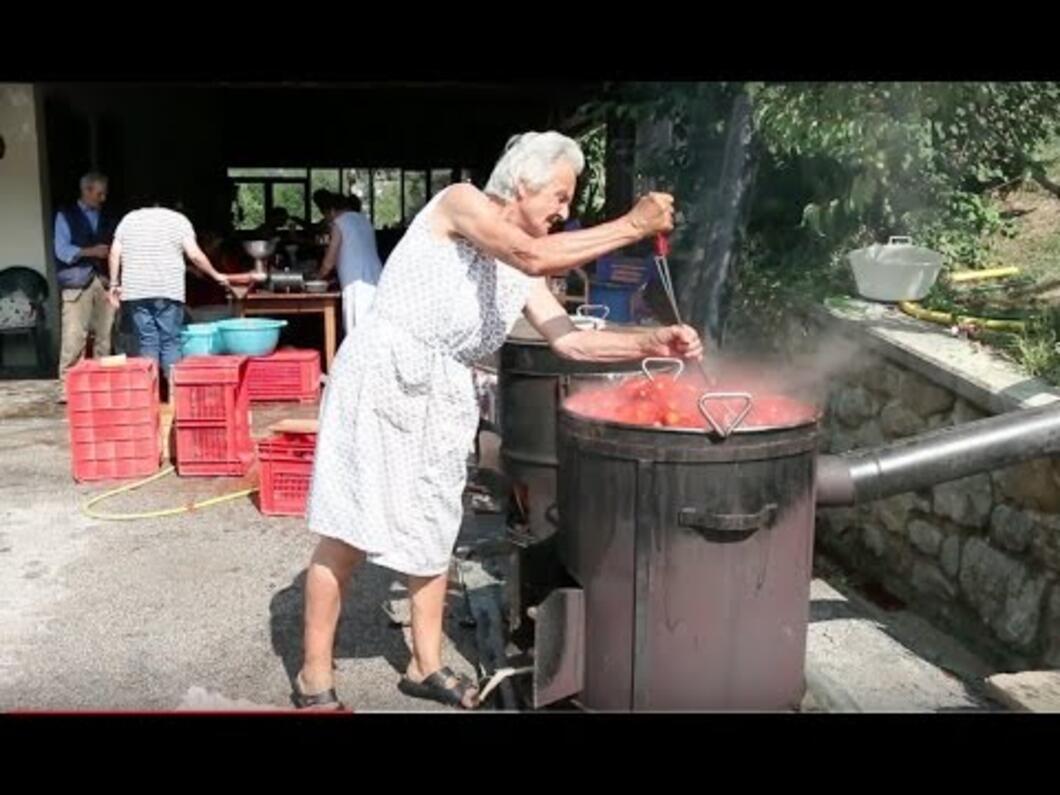
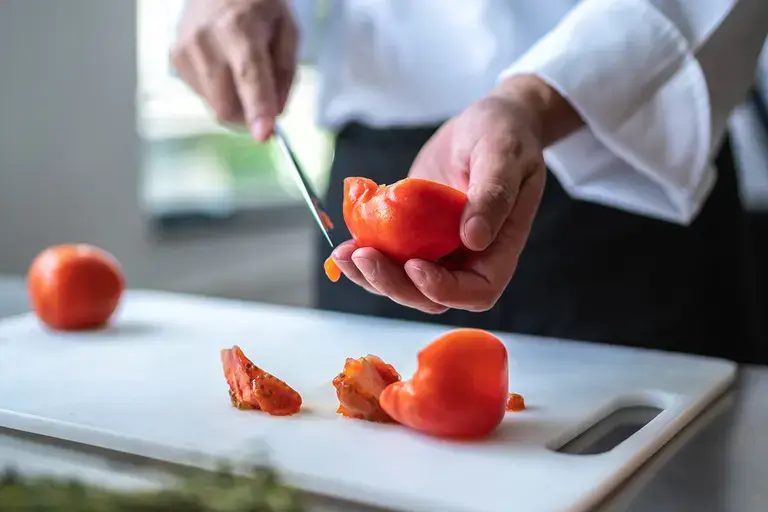
Step 3: blanch

Place what remains of your tomatoes into a large stainless-steel pot and bring to the boil. Allow to simmer for 2-3 minutes, then scoop them out and place them in a large bowl or bucket of cold water. You can add ice to this water to stop the cooking process and make the next stage a little easier, but it’s not necessary.

Step 4: remove the skins

Use a semi-blunt pairing knife to peel the tomatoes' skins. The skins can be added to the compost heap along with the rest.

Step 5: cook

Transfer your tomatoes back to the pot and cover with water. Bring to the boil and cook for 10 minutes. Turn off the heat and allow the water and tomatoes to cool down completely.

Step 6: blend

There are a few different ways to do this. You can use a blender or food processor, or even a Nutribullet. It depends on what kind of consistency you want from your passata. If you want it fully smooth, use a blender; however, if you prefer a more ‘rustic’ rough consistency, the best way is to use your hands. Simply roll up your sleeves and squish the tomatoes with your hands; the kids will love to help at this stage.

Stage 7: store

Ideally, the passata should be vacuum sealed in jars. To do this, ladle the passata into jars; a wide-mouthed funnel is useful at this point. Fill up to one inch from the top and place the lids on. Any jar will do, but the tall passata jars from your store-bought product will do fine. The reason they work well is that they occupy a small space when placed back into the pot, meaning you can pack them in when you are creating the vacuum. Place them standing up in a pot of water. It’s a good idea to place a couple of kitchen cloths around the jars to prevent breakage. Then cover the jars with water and bring to the boil, lower the heat, and simmer for 30 minutes. This will create a vacuum and prevent the growth of bacteria that could spoil your passata.

If this sounds like too much trouble, you can always freeze your passata pomodoro. It will keep well for a long time.

Spread the flavour – share this story

Join the community
Badge
Join us for unlimited access to the very best of Fine Dining Lovers.
Unlock all our articles
Badge
Register now to continue reading and access all our exclusive stories.

Already a member? LOG IN