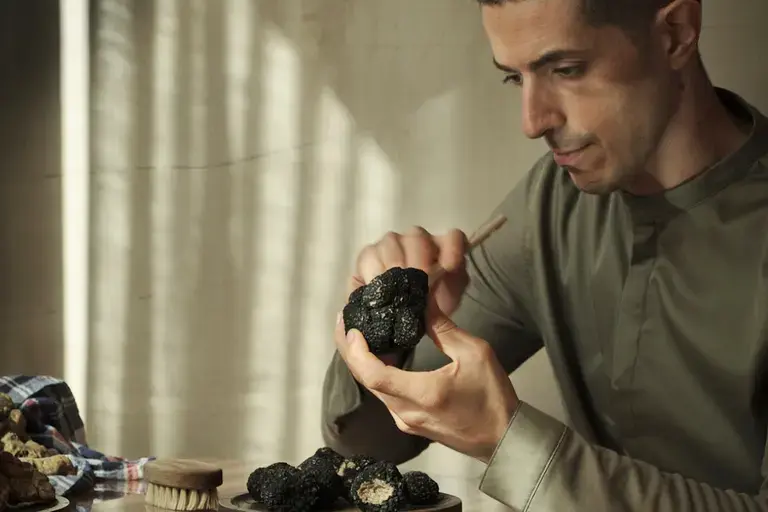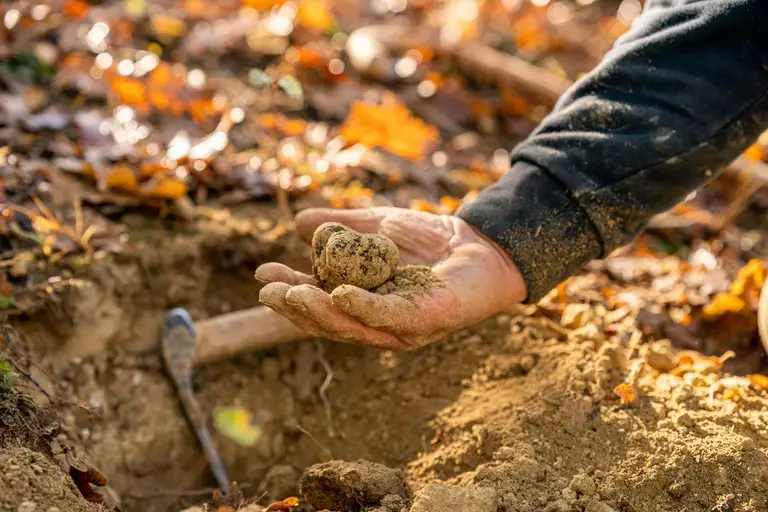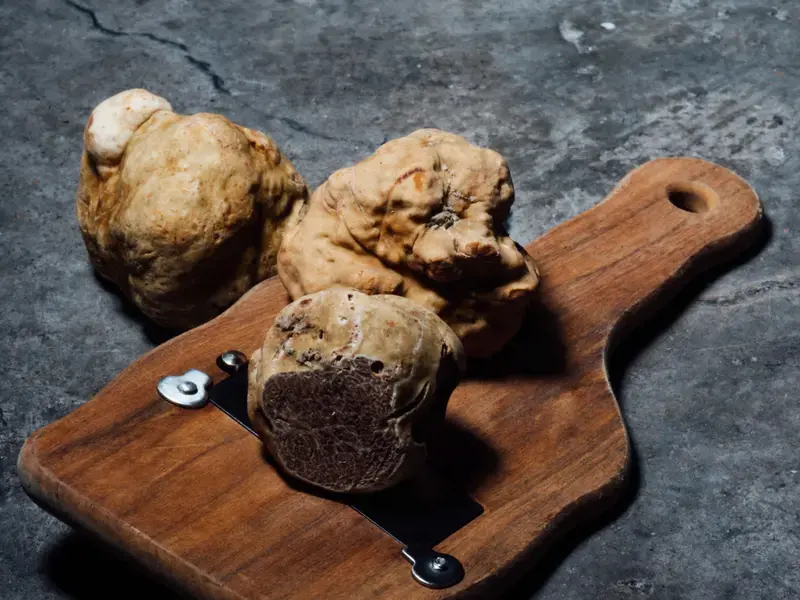
Precious, fragrant and refined, the truffle is a valuable ingredient, but how do you use them at home? We asked chef Michelangelo Mammoliti, who has been directing the two-Michelin-starred La Rei Natura restaurant for four months, inside the Boscareto Resort & Spa, a five-star luxury hotel in Serralunga d'Alba, in the heart of the Langhe in Piedmont, Italy – the homeland of the white Alba truffle DOP. Previously he was at two-starred Madernassa di Guarene.
In his new gourmet home, Mammoliti, thanks to a 200-square metre vegetable garden and greenhouse, has more than 120 varieties of tomatoes, almost 20 types of chillies, around 200 aromatic herbs and flowers, a myriad of green beans and beets and, of course, the truffles that the local ‘trifolao’ bring fresh regularly.
“I like using truffles and I don't set limits for myself: everything that is in season can be combined without any problem. The truffle is a great ingredient, a local ingredient par excellence together with hazelnuts: an element of the territory, which I describe through my cuisine," he explains. Find out how to use truffles at home with these tips from Mammoliti.
Use cold truffles on hot dishes
“The first piece of advice is to always use truffles on hot dishes and never cold ones, because it is an ingredient that needs heat to release its aroma,” explains Mammoliti. “The aromas are perceived when hot and the flavours are not perceived well when cold: if you put the truffle on a cold dish, you will not perceive any volatile element. On the other hand, the truffle must be very cold, just taken out of the refrigerator."
For example, to best serve truffle on a classic tartare or meat platter, the chef reveals a trick: "At home you can serve the ground meat at room temperature together with a hot sauce: from Piedmontese bagna cauda, based on anchovies, oil and garlic, to the classic fondue. The important thing is that there are notes that recall the garlic part of the truffle: black truffle can also be grated on top”.
Always choose seasonal truffles
Each season has its own truffle. “The suggestion I give is to always choose seasonal truffles, and never before November,” says the chef. “If it has been hot, the season starts from mid-November onwards, until January. The best truffles are found in January, after the first frosts have occurred: it's a bit like cabbage, which becomes tastier when it gets cold.”
Combine truffle with the right ingredients
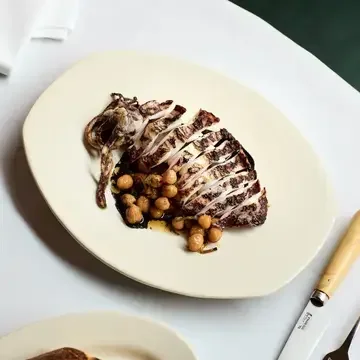
In addition to beef tartare, another classic pairing is with eggs, but the chef places no limits on his imagination and pairings: “Truffles work just as well with fish, such as scallops or turbot, as well as with game. But it is also perfect with vegetables such as artichoke thistle (cardi),” he explains. “Among the vegetarian proposals, I prepare a sort of celeriac, which translates into a mille-feuille of celeriac alternating with black truffle, with Losa cheese fondue with white truffle: everything is assembled in a pan and breaded, to resemble a melted, stringy mozzarella known as en carrozza. Once cooked, it is cut and opened. I serve it with fermented celeriac sorbet”.
But truffles also go well with puree. “I use it in Joel, which is a dish dedicated to Joël Robuchon, a fondant of potatoes cooked in the extraction of roast chicken, soft-boiled sauce, confit yolk," he specifies.
Let’s not forget another classic combination: truffle and pasta. An example, Canto Piedmontese, a Mammoliti dish based on dumpling-type ravioli stuffed with cuts of boiled meat (cotechino, shin, tongue, hen, tail, scaramella) and served with a Piedmontese bolitto dashi, prepared with a siphon in the dining room with boiled broth, katsuobushi, dehydrated champignon mushrooms and kombu seaweed.