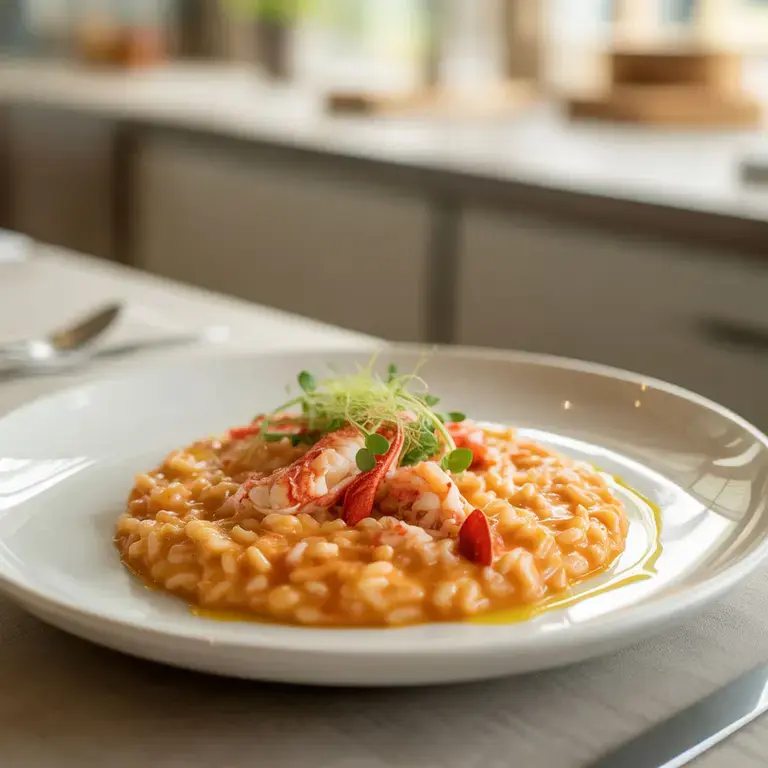

When learning how to cook lobster risotto, there are a couple of easy tips and tricks to get the most out of the dish. First, don’t skip the addition of the dry white wine. It brings a desirable brightness and acidity to the dish that helps to balance the rich, buttery flavours of the lobster and creamy rice. The alcohol will cook off and leave behind complex flavours that elevate the dish.
You can either grate the Parmesan cheese on top after cooking or mix it into the risotto. Some chefs opt to do the latter to make the risotto even more indulgent with melted cheese stirred throughout.
Choosing the right rice and broth
When following a lobster risotto recipe, you need to choose the right rice variety and broth to achieve the traditional risotto texture. Arborio, featured in the recipe above, is the most common variety used for risotto dishes and is easily sourced from any well-stocked grocery store. You can also use a type called Carnaroli, which has a higher starch content and a greater ability to hold its shape, which will give you a creamier and firmer risotto.
The best broth to use for a risotto is the type that will best complement the main ingredients, though chicken broth is widely used in this dish regardless of whether it’s a seafood-based risotto. Chicken broth has a rich and savoury flavour that pairs well with the lobster and doesn’t dominate its delicate taste profile. Vegetarian broths are also widely available, if making a plant-based risotto dish.
How to cook and prepare lobster for risotto
In this recipe for lobster risotto, we’ve suggested gently sautéing the lobster tails to bring out the sweetness and richness of the lobster meat. However, there are many ways you can cook lobster to use it in this dish. Boiling lobster meat is another popular technique for preparing this refined seafood ingredient, and can be easily followed at home. But we like the additional flavour that sautéing the lobster brings to the risotto dish.
Lobster can often feel like an intimidating ingredient to cook with at home, but there are a few tricks to help make it easier to prepare and enjoy. In this simple guide, we’ve shared a detailed video walking you through all the steps you need to know to prepare a full lobster, including how to extract the meat from lobster tails.
You can substitute the lobster for crab, if you prefer the taste, though it will affect the overall texture and end profile of the dish, and there are a few key differences to consider. Lobster meat is known for being tender, firm and succulent, whereas crab is sweeter in flavour, but also far flakier, so the end texture of the risotto will be very different.